Branding for the entrepreneur's soul: How Printify brought the side hustle back.

Updated: Aug 11
Print-on-demand had a credibility problem. Rebranding Printify meant changing the story around the category itself.

Print-on-demand had a reputation problem.
For plenty of people, the category belonged to the same corner of the internet as dropshipping gurus, passive-income promises and get-rich-quick schemes. The technology was legitimate. Thousands of people were building real businesses with it. But the culture surrounding it often made the whole industry feel questionable.
That created a bigger problem for Printify. You can build a better identity, website or campaign, but if people are skeptical of the category you operate in, you inherit that skepticism. So when we rebranded Printify, the opportunity went far beyond changing how the company looked. We had to help change what print-on-demand meant.

The proof is in the people
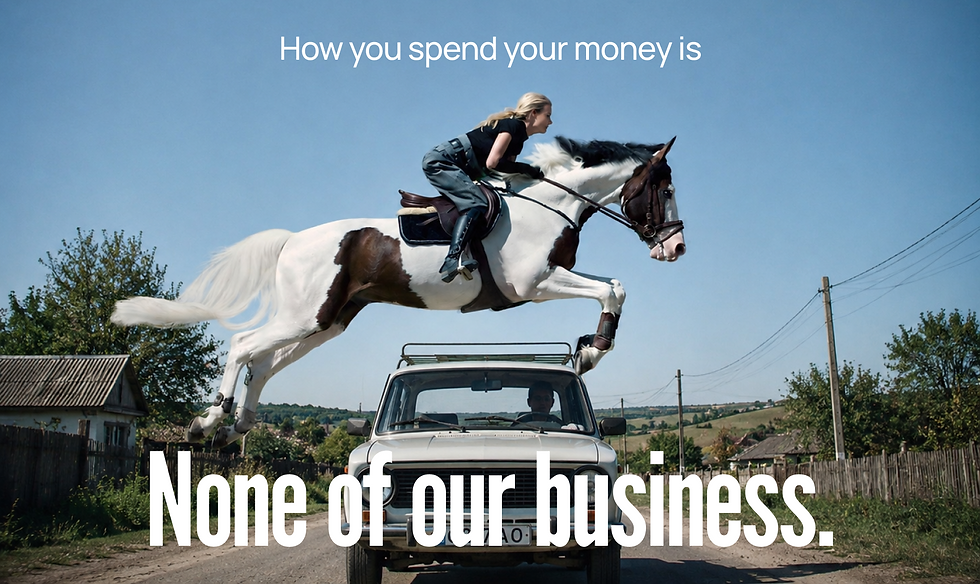
The strongest argument for print-on-demand was already sitting inside Printify’s customer base. Real people were using it to build real businesses. And not just any side hustles, but businesses that allowed them to work from Bali for half the year, take their kids on vacation, and become financially free. That gave us a much more credible story than the usual promises about passive income and easy entrepreneurship. We could show the work: the risk, the creativity, the products people had made, the businesses they were building, and the lives those businesses supported.
Naturally, our merchants became the heroes.
That shift influenced how Printify spoke, what we celebrated and how the brand showed up visually. The story became less about a platform that prints products and more about the people using it to make a life on their own terms. It also changed the emotional territory available to the brand. Entrepreneurship could be ambitious without being obnoxious. Success could be celebrated without pretending it happened overnight. Print-on-demand could feel accessible without being sold as effortless.

Financially free, at home for the brave
Changing the story also meant changing the visual world around it. The creative work had to give merchants and their businesses the same seriousness and attention that established brands gave founders, creators and entrepreneurs. That meant building a brand capable of holding very different kinds of stories together: someone making their first sale from their bedroom, an established merchant scaling their business from the beaches in Bali. And not to mention: product launches, education, community, global campaigns and major money moments.
It also meant creating places where the category could see itself differently. Printify went on to host Amplified - the first and largest events dedicated to print-on-demand, bringing merchants, creators and the industry together around something that previously existed largely as a fragmented online ecosystem. The category began to behave like an industry because people were treating it like one.

Brand can change the context around a product
This is the part of branding I find most energizing. Sometimes the problem sits inside the company. Sometimes it sits in the perception surrounding the entire category. Printify could improve its product endlessly and still operate inside a story about print-on-demand that somebody else had written. Changing that story created room for the company to mean something different.
Over the period surrounding the rebrand and Printify’s growth, the company reached 10 million customers and became the most-searched print-on-demand brand in the world. Printify and Printful, once fierce rivals, eventually announced that they would merge.
Those are company outcomes, created by far more than brand and design alone. But they happened alongside a profound change in how Printify presented itself, its merchants and the industry it was helping to build. For me, the more interesting evidence is visible in the distance between the two stories. Print-on-demand could have remained a slightly dubious empty internet promise of easy money. We helped give it another story: real people building real businesses, achieving financial freedom their way.


Comments