Building a brand from scratch


I started at Oraion before it even had a name. Over the course of a year, I named the company, designed its identity, built its brand and product design systems, worked directly with engineers to shape the product, established its voice, created its illustration language, designed its marketing presence, and started building the design team around it. Three months after joining, I moved from Design Lead to Head of Brand in order to better facilitate Oraion's organizational strategy and growth.
As its first designer, Oraion was at a point when the company and product were still forming. We were building a business intelligence platform designed to help companies make sense of large amounts of data and get useful answers in seconds rather than days or weeks. There was no established brand team, mature design system, or finished identity for me to inherit. That gave me the opportunity to build the foundations myself, starting with something fairly fundamental: what the company should be called.

Starting with the name
I named the company Oraion, drawing from the Orion constellation.
The idea connected naturally to what we were building. A constellation takes individual points and turns them into something recognizable. Oraion did something similar with data, connecting information from across a business and turning it into something people could understand and act on.
That thinking gave me a foundation for the wider identity. I wanted the brand to feel intelligent and technical without falling into the usual visual language of enterprise software. The logo took shape from the same set of ideas. Its geometry references data points, data visualization, message bubbles, and the conversational nature of the product. There's also a hidden O in the symbol, along with a shape that feels akin to a home button commonly seen in digital interfaces.
The goal was to create an identity that made sense for the product we were actually building and gave me enough material to develop a much larger system around it.

Building the brand and the product together
At an early-stage company, the line between brand design and product design gets blurry very quickly. 😅
While I was developing Oraion's external identity, I was also working directly with engineers to help shape the product itself. I designed UI, dashboards, data visualizations, components, and interaction patterns, while building the corresponding brand system in Figma.
That overlap became an advantage. The same typography, spacing principles, visual hierarchy, color logic, and graphic language could move between product and marketing. Someone could see an Oraion ad, visit the website, and enter the platform without feeling like they had moved between three different companies. It also meant thinking beyond individual screens or marketing assets from the beginning. I needed systems that could support an enterprise software product as it grew, while giving enough flexibility to communicate new features, use cases, and ideas without redesigning everything every time.

Finding a visual language for business intelligence
Business intelligence visuals can become overly technical very quickly. Dashboards, tables, numerical data, and futuristic imagery are everywhere. I wanted Oraion to have something we could own.
I developed a custom illustration library built around isometric objects, technology, physical office objects, cables, screens, charts, and small moments of surrealism. The vibe: sharp, retro objects that look tangible and touchable. So much of today's AI-product-sphere is loaded with abstract representations of what technology looks like as it exists in the ether. I wanted our brand to feel tactical. A limited palette of black, white, grey, and Oraion blue kept everything connected to the core identity.
The illustrations gave us a way to talk about complicated subjects without showing another dashboard every time.
More importantly, they were designed as a system rather than a collection of one-off artworks. The same visual language could move into social media, campaigns, presentations, the website, product communication, and other brand touchpoints while still feeling recognizably Oraion.


Giving Oraion a voice
I needed Oraion's voice to make sense to engineers, product people, leadership, and everyone else communicating on behalf of the company. So instead of talking about abstract tone-of-voice principles, I asked everyone to imagine Oraion as a person. How would they introduce themselves at a cocktail party? What would they wear? How outgoing would they be?
Oraion became the person in a black sport jacket and crisp white shirt. Confident, direct, and self-assured. They wouldn't speak often, but when they did, they'd have something worth hearing. I described the voice as a TED speaker rather than the robotic voice at a grocery store checkout. A leader and trusted colleague, not a friend trying to entertain you.
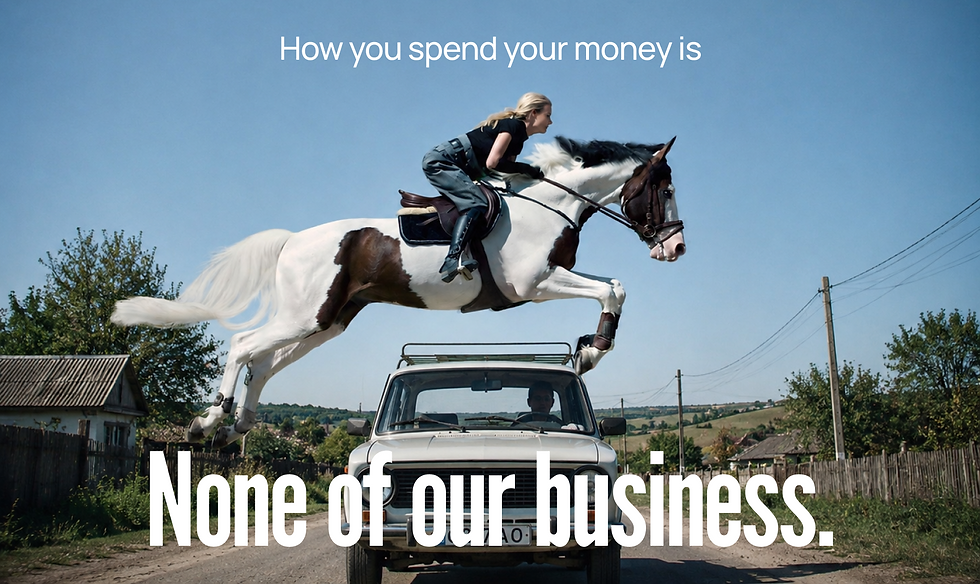
That personality became a practical filter for product and marketing copy, producing lines like "Get answers in seconds. Not weeks." and "Dozens of tools. Millions of dollars. Still no answers." More importantly, everyone could understand the standard without needing to become a brand expert first.

Turning the work into a system
As Oraion grew, I started turning the decisions I'd been making into infrastructure other people could use.
The brand system covered typography, color, layouts, components, advertising structures, illustration, messaging, and the wider rules for how Oraion should show up. On the product side, I built reusable UI components and patterns that could support new functionality without requiring every screen to start from zero. The advertising system followed the same principle. Instead of designing isolated templates for every possible message, I established enough structure for different combinations of copy, product UI, and illustration to work together while keeping the identity consistent.
This became increasingly important as more people started touching the brand. A design system has to survive contact with people other than the person who created it.

Bringing everything together
The Oraion website became one of the clearest demonstrations of the system working as a whole. By this point, I had a name, positioning, identity, product UI, illustration language, tone of voice, messaging system, and growing library of components to work with.
The website brought all of those pieces into one experience. It had to explain a complicated enterprise product quickly, show the platform clearly, communicate different use cases, establish credibility, and give people a reason to act. Product UI became part of the storytelling rather than something hidden behind generic SaaS imagery. The same system could then scale in the opposite direction. A long website could contain detailed product explanations, while an OOH execution could reduce the brand to a logo and a few lines of type.

From first designer to building the team
As the company grew, I moved to Head of Brand and began expanding the design function with additional headcount. By then, there was something for new designers to join: a defined brand, a product language, reusable systems, established creative principles, and a growing body of work showing how those principles should be applied.
That progression matters to how I think about creative leadership. I lead by doing, not just directing. As much fun as it is to ideate on big picture strategy, I'm equally happy to be working alongside other creative people on nitty gritty production challenges, turning what works into something the team can use, improve, and eventually take further than I could have done alone.
A year earlier, I'd joined Oraion as its first designer. By the end of that year, the company had a name, a visual identity, a voice, a brand design system, a product design system, a custom illustration language, a website, a growing marketing system, and a larger design function to take it forward.
For me, creative leadership starts with creating.



Comments